Our focus was to use sustainable materials in all elements of the Design, whilst keeping with the current units and Co-op design concept.
Not only is the unit made from entirely recyclable materials, but the function of the unit is to encourage customers to recycle their home plastic and battery waste. The Donation Bin also encourages customers to put something back into the local community by donating products to help local food banks.
The Sustain tool was used to find eco-friendly alternatives to standard materials which have the biggest impact on the environmental footprint. Sustain tool was used to score the environmental impact of the unit and its packaging both before and after making these sustainable material choices.
Changing to more sustainable materials reduced the Sustain score from 42.59 to 18.83 and reduced the Carbon Footprint from a score of 152.33 to 45.95. Altering the materials in the Recycle Bin and signage reduced the Sustain Score from 43.72 to 36.28 and reduced the Carbon Footprint from 228.77 to 70.36.
Donation Bin

Recycle Bin
If the unit cannot be utilised in another store at the final end of its life, it will all be recycled by the client or collected by us to be recycled.
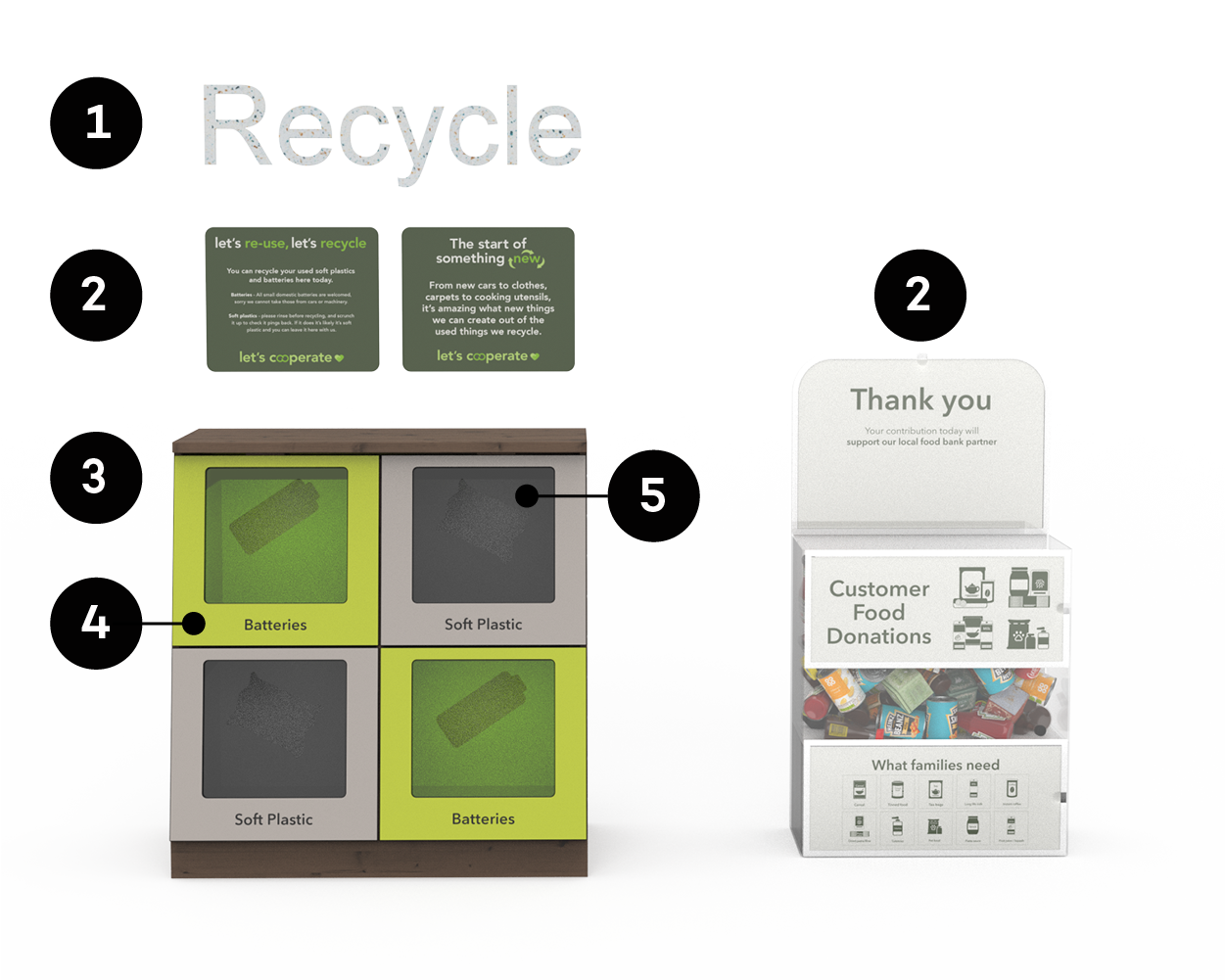
1) Recycle Text – Durat 007 Martini Palace Collection made from recycled content and raw earth minerals.
2) Signage - Recycled Card Eco Display Board
3) Main Carcass - Slow Grown Scandinavian Pine FSC and PEFC-approved supplier.
The use of natural raw timber being used to construct the main carcass of the display has significantly reduced the amount of machining & processing required when producing the display.
4) CompacMel - recyclable high-density wooden fibreboard used instead of MFMDF.
5) Front Screens - Greencast Acrylic - 100% recycled material
By negotiating a small installation window by the client we tied the Installation in with other jobs in the area reducing the need for a dedicated delivery. We also used minimal biodegradable packaging when transporting to the site.
As a business, we have begun to put more consideration into sustainable packaging alternatives after insights from the Sustain Tool highlighted it as our second largest waste stream after raw materials. Developing this unit entirely from sustainable materials demonstrated that practical, lower-impact alternatives are achievable, and we have since embedded this approach into our design policy by proactively offering clients sustainable options alongside their standard material and production preferences.